

John van der Zee
Photo: RB Studio
John van der Zee is the author of a dozen books, including the best seller The Gate: The True Story of the Design and Construction of the Golden Gate Bridge. His work has appeared in The New York Times, The San Francisco Chronicle, The San Francisco Examiner, The Los Angeles Times, Town & Country and salon.com. He lives in San Francisco and in Healdsburg, California.
Books
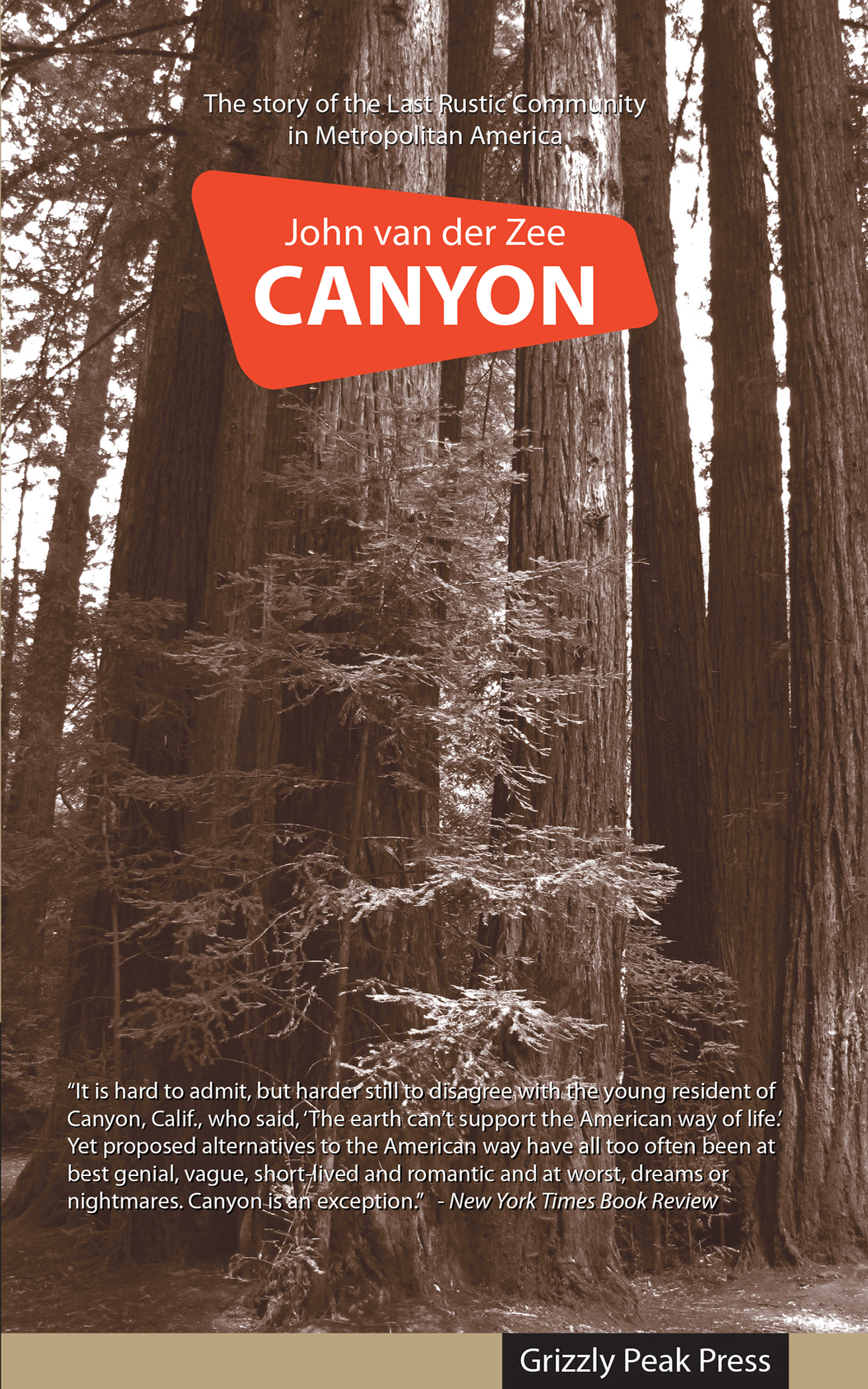
Originally published in 1972, Canyon recounts the struggle for survival, against powerful and determined opposition, of a counter-cultural community tucked in a redwood canyon about eight miles from San Francisco. A community of individuals united by the idea of living complimentary to nature rather than subduing it, the men and women of Canyon developed strategies of community organization, resistance, management of resources and political moxie some foolish, some prescient that allowed the community to survive, barely then, and provide what The New York Times termed A blueprint for meeting nature half-way. Mr. van der Zee has added a heartfelt fore and afterword, a reflection on his findings in the small community of Canyon as a young man, through the sagest view of an accomplished writer and grandfather today. ...Canyon has survived and even thrived, often in the face of determined and powerful opposition, in the process acting out some of the most fundamental questions concerning the American national character. How shall we live on this land which all of us, save Native Americans came to as strangers. What comforts are we willing to sacrifice in the interest of freedom?
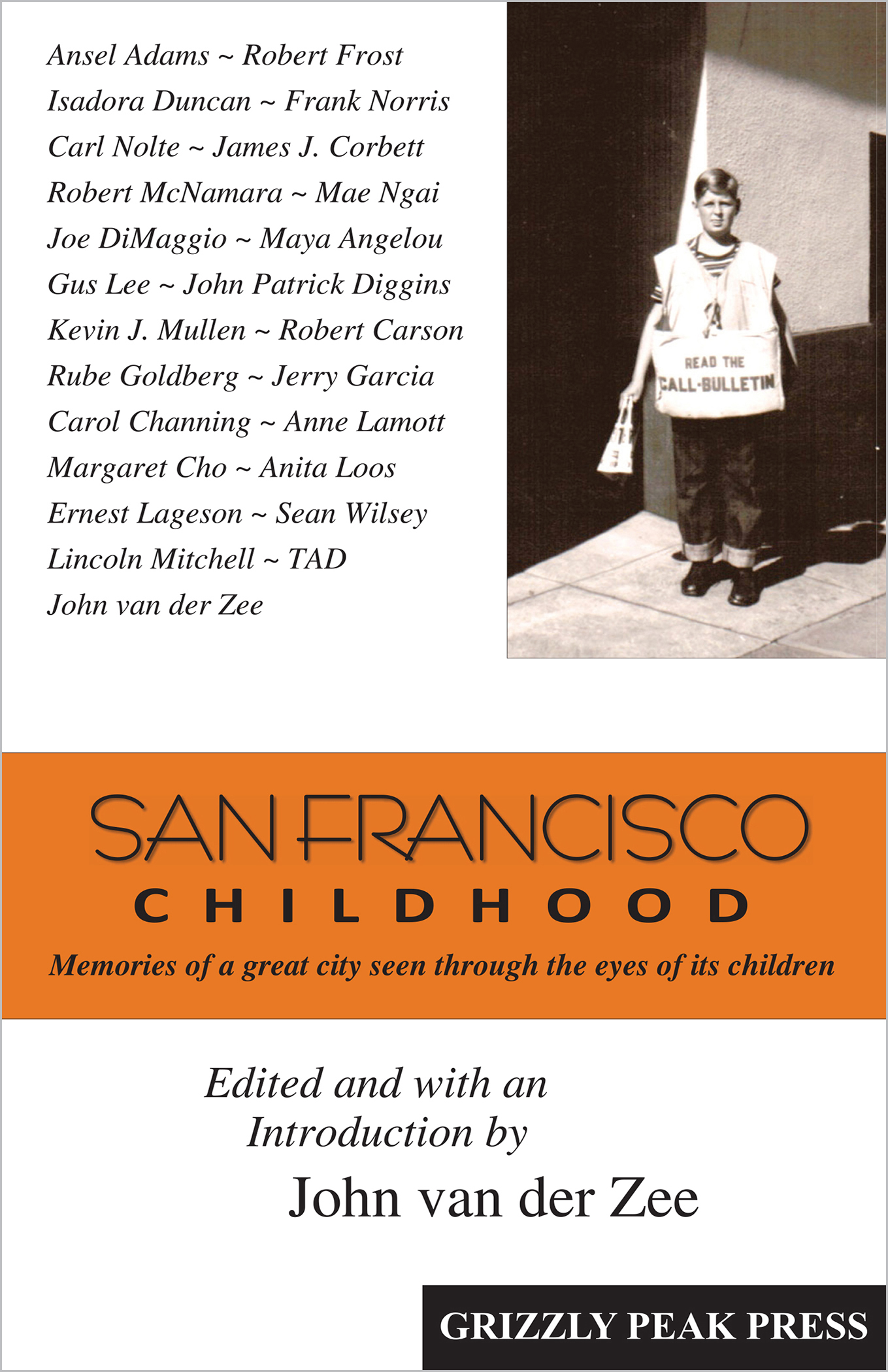
Most books about a place try to mirror it in some way, to present as realistically as possible a portrait or photographic study of a locale or era. San Francisco Childhood, is different: a city viewed through a prism, a great equalizer of a world as seen by children. Each story is a facet presenting, with the freshness and acuity of being seen for the first time, San Francisco's neighborhoods, people, epochs, and constantly re-inventing culture. In the process we see not only how a city uniquely itself developed, but how it formed and changed the children who grew up there.
ISBN: 978-0983926405

In 1933, in the pit of the Great Depression, a young, unemployed American chemical engineer decides to leave his home in California and walk to South America. A year later he fetches up in Bogota, Colombia, where he finds a job with a pharmaceutical firm, gets involved with coca and its derivatives, seduces a local girl and marries her. After attempting to sell his employer on promoting coca derivatives as proprietary drugs, he researches and eventually develops a method of combining coca with wine, as was done with Vin Mariani and other over-the-counter products of the 19th Century. Only his product is recoverable as cocaine.
With Repeal, he is able to export his product to Florida, where it is sold to a limited clientele of the wealthy in Palm Beach. Within three years he is rich, the owner of a 7,000-acre Colombian estancia, with friends among the influential German community in Colombia.
In 1936, accompanied by a German friend, he travels to Berlin for the Olympics. Near Munich they are houseguests of a friend of the German’s father, a party official who is overseeing construction at Berchtesgaden, Martin Bormann. Bormann is aware of the young Americans business, and blackmails him into supplying his product exclusively through Bormann to his patron and boss, Adolf Hitler. The American returns to Colombia, where he becomes Hitler’s dealer and, through this connection, is a party to some of the major South American events of World War II. He is pressured by the German ambassador, his paymaster, to help set up an underground railroad for sailors off the Graf Spee, interned in Argentina, to return to Germany. He is visited by U.S. Army Air Corps officers, posing as employees of Pan Am, who are secretly building at Natal, Brazil, the largest airfield in the world to transship American planes across the Atlantic narrows for the invasion of North Africa.
When Colombia enters the war in 1943, he loses contact with Bormann, only to be reconnected, through the Colombian German community, late in 1945. Bormann, alive, seeking refuge, is heading West from Spain aboard a Spanish freighter. The American, still under threat of blackmail, is supposed to meet him at an island off the Caribbean coast of Colombia, called Blackadore. The American heads for the island, the resolution of the story, and his destiny.
With Repeal, he is able to export his product to Florida, where it is sold to a limited clientele of the wealthy in Palm Beach. Within three years he is rich, the owner of a 7,000-acre Colombian estancia, with friends among the influential German community in Colombia.
